
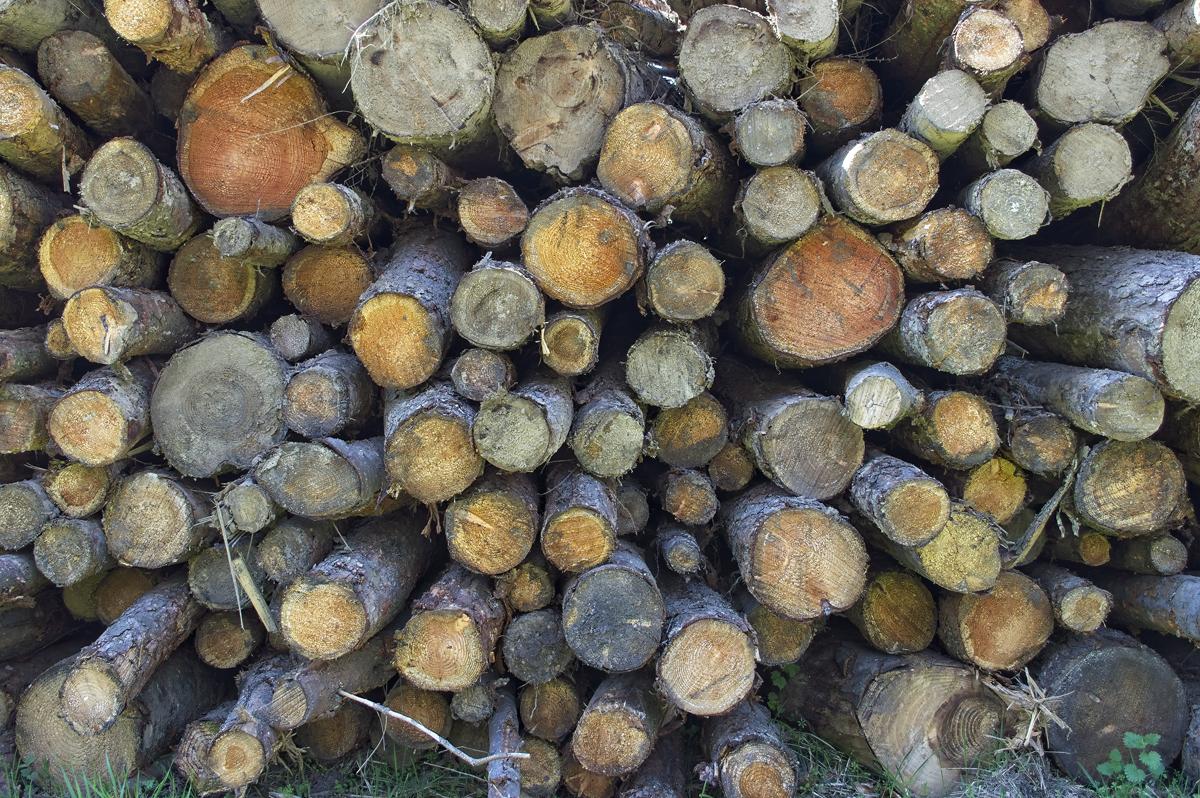
Hardwoods & Softwoods: What’s The Difference?
Whilst doom scrolling through Youtube one night (as you do), I came across a video in my feed by the inimitable Simon Whistler. I swear, this guy has like ten channels on Youtube, so the chances of one of his vids showing up on your news feed is highly probable (and I struggle to keep one channel going).
The video in question was titled “Difference Between Hardwoods and Softwoods”, on his Facts Quickie channel. Which is actually an abridged version of this video, entitled; ”The Difference Between Hardwoods and Softwoods (I Swear, More Interesting Than It Sounds)”, on his Today I Found Out channel.
I clicked and was shocked and surprised with the information the video contained.
The Hardwoods & Softwoods Lie
Being a crafter, predominantly working with reclaimed wood, you hear the terms Hardwood and Softwood bandied about quite a bit. This is something I’ve never really put much thought into, as I rarely (if at all), see hardwood furniture carelessly thrown into skips. In my head (in a very basic sense) the definitions were; Hardwood = Expensive, and Softwood = (relatively) Inexpensive.
In the back of my mind I always thought there would be some delimiting factor, some cut-off point if you will, where two species of tree (so similar) would fall either side of the hardwood and softwood divide. A line has to be drawn somewhere, right? Not thinking any more of it, I’ve always just left it at that.
So, to find out that delineation between Hardwoods and Softwoods isn’t as cut and dried as I once thought, came as a bit of a shock to the system. And that the relative hardness of the woods had absolutely nothing to do with it, was more than a bit of a revelation.
Classification Clarification
In the video, Simon states that;
“…classifying a wood as either hard or soft is entirely dependent on the seeds produced by the tree it comes from. If a tree’s seeds have some sort of covering when they fall from the tree, be it in the form of a shell or fruit, then the wood of that tree will be classified as hardwood. On the other hand, if a tree produces seeds that are simply left to the elements when they fall to the ground, then the wood harvested from it will be classified as a softwood.”
I’m sorry, what..? It’s all down to the seeds, and has nothing to do with the wood of the tree itself..? *speechless*
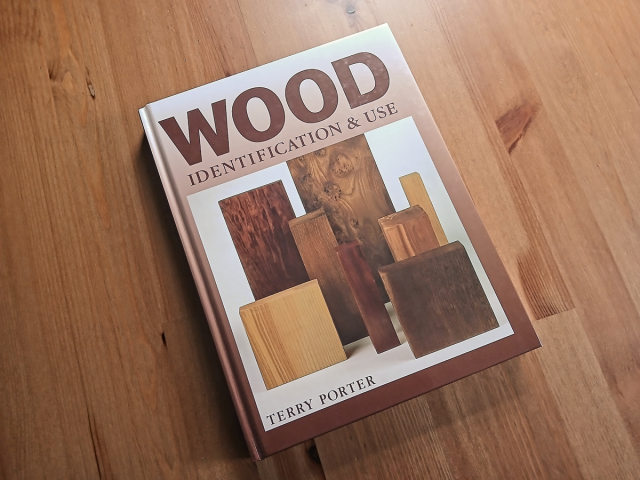
Being a thorough researcher and not taking information at face value (especially information posted online), I delved into my books to see what they had to say about it. I’ve had ‘Wood Identification & Use’, by Terry Porter (GMC Publications 2004), in my library pretty much since its release. A quick flick through the pages brought me face-to-face with the truth. It’s definitely down to the seeds.
Spermatophytes: Angiospermea & Gymnospermea
To be more precise, it’s actually down to the botanical classification of each tree species. The collective term used to refer to plants that have seeds is; Spermatophytes. And of these Spermatophytes that produce ‘woody’ material, there are Angiospermea and Gymnospermea.
Angiospermea (or Angiosperms) refers to Hardwood species, which (if you remember) are the trees that hide their seeds in a shell, nut or a fruit. Whilst, Gymnospermea (or Gymnosperms) refers to Softwood species, which are the tree species that produce “naked seeds”.
This is all well and good, but naming and classifying tree species in this way is extremely confusing and irks my OCD and autistic tendencies. After doing a little more study it’s evidently clear exactly why this situation is so confusing.
How Hard Is Your Wood?
The confusion is caused by these terms having absolutely no relevance to the physical hardness of whichever wood species is in question. But, before we get to that, I need to discuss how wood hardness is quantified, then we’ll have a common frame of reference and all will become clear (or more confusing).
The most common way to determine the hardness of any wood species is something called; The Janka Hardness Test. Named after the person that came up with this test (one Gabriel Janka), the process (in essence) involves pressing a .444 inch steel ball to half its diameter into the wood sample and recording how much force it took to do so.
This force is historically measured in pounds-force (lbf), but for you staunch metric users Newtons (N) are also used.
Where The Confusion Lies
So, now we have an understanding of how wood hardness is quantified, this is where the whole Hardwood and Softwood definition thing spirals into madness.
Let’s take Balsa Wood as our first example. Any crafter or modeller worth their salt has used Balsa at some point. It’s light, easy to cut and if you needed to travel from South America to Polynesia in the late 1940s, then Balsa is your “go to” wood to build a raft. And with a Janka Hardness Rating of only 100 lbf (444.82 N), it is the second softest wood species. Yet, its seeds are contained in a green capsule “fruit”, thus making it a bloody HARDWOOD..!
Side Note: For those who are interested (or just a little bit intrigued), the softest wood species is Cupio, which has a Janka Hardness Rating of a mere 22 lbf (97.86 N). And yes, this is classified as a chuffin’ hardwood, too..!
Now let us consider the wood from the European Yew (Taxus baccata). This species has a Janka Hardness Rating of 1,520 lbf (6,761.30 N), yet is classified as a softwood. To put this into some context; English Oak (Quercus robur) only has a Janka Hardness Rating of 1,120 lbf (4,982.01 N) and Teak (Tectona grandis) has a rating of 1,155 lbf (5,137.70 N). Both of which are considered hardwoods.
Confusion Conclusion
After looking into all of this, I’ve decided to go into more detail about the Janka Hardness Test in a separate blog. I’ll try and get this out for next month (no promises), but I’ll link it here when it’s live.
As for all of what we’ve gone through above, I still have more questions. Some of my Japanese saws have different Hardwood and Softwood blade options. At what hardness should you stop using the softwood blade and start using the hardwood blade?
I don’t have it all sorted in my head yet and more research is needed. Again, it’ll probably end up being another blog. So, watch this space.
Further Reading And Footnotes
Links to both of Simon Whistler’s videos on Hardwoods and Softwood are here (abridged) and here (Full), if you wish to view for yourself.
If you still read books, then the “Wood Identification & Use” book, by Terry Porter from Guild Of Master Craftsman Publications (2004) ISBN 1-86108-377-7, can be found on websites such as Amazon, eBay, World of Books, etc.
For more information about me and all that is Silverhand Creative, go check out the About Me page on this website. I have a presence on Instagram and Facebook, where I post photos (and the odd video) of ongoing and finished projects. There’s also a YouTube channel, where you can see how I go about doing what I do and what tools I prefer to use. So, feel free (there’s no pressure) to follow and/or subscribe to any (or all) of the above.
If you’re feeling fruity, and would like to support my endeavours, then please head over to the silverhandstore.com Shopify store and treat yourself a little something. I am most definitely amenable to commission work and have a web form for you to get in touch, should you be looking for something a little more bespoke.
All trademarks (registered or otherwise) used in this blog lie solely with their respective owners.