
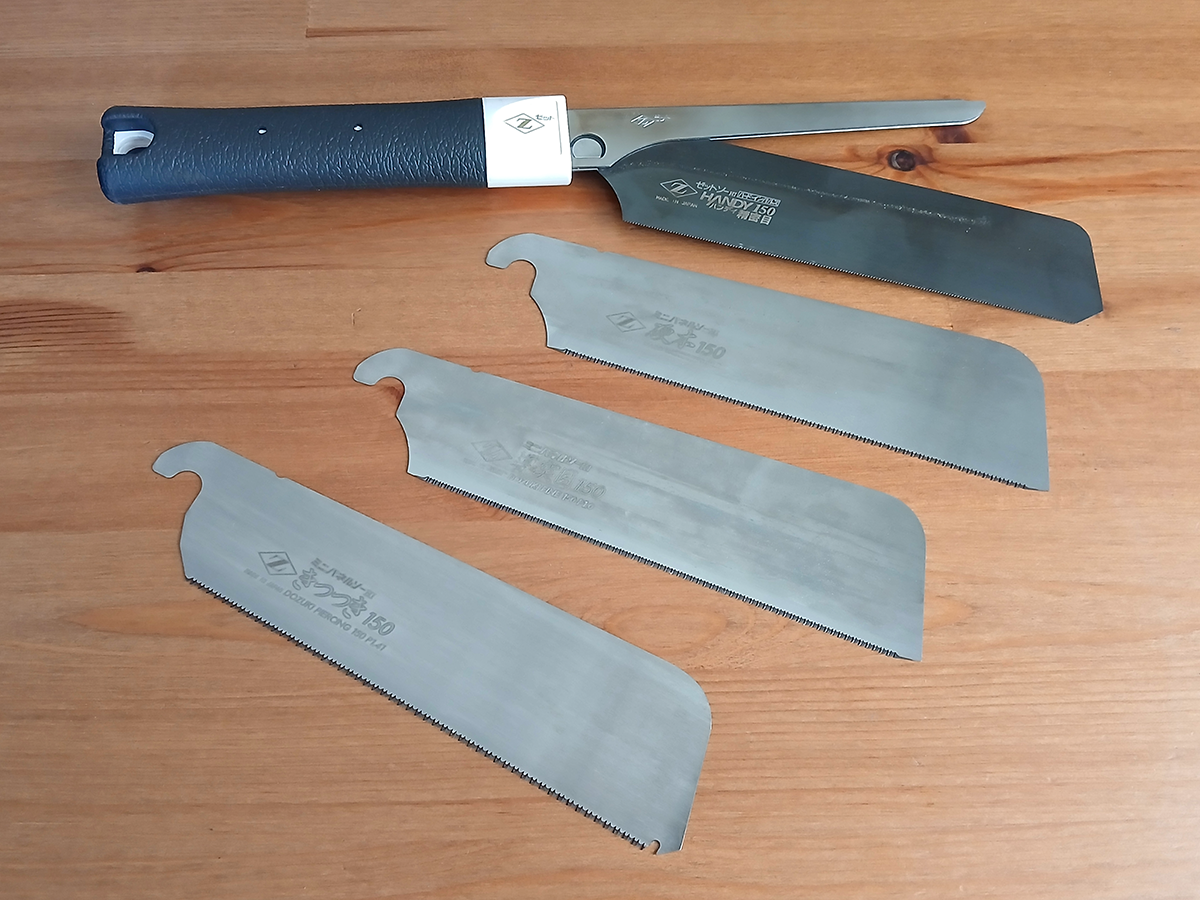
Why So Many Types Of ZETSAW Replacement Blades?
ZETSAW replacement blades come in all shapes, sizes, fixing types and tooth configurations for every sawing situation you may come across. So much so that, since becoming an importer of the ZETSAW range of Japanese Saws, it’s given me a greater appreciation for all the different types.
Depending on the project or job you have (or are planning) will determine the type and size of blade required. Whether you’re working with dried lumber, green (wet) wood, bamboo, PVC pipe, copper pipe, aluminium extrusions, cast iron gutters, plasterboard, or (more disconcertingly) bone, then there will be a specific ZETSAW replacement blades made exactly for that purpose.
What follows is a brief rundown of everything you’ll need to consider when selecting the correct blades for the job.
General Blade Categorisation
As previously mentioned in my Japanese Saws blog, Japanese saw blades generally fall into one of two categories; Ryoba (double-edge) or Kataba (single-edge). Please, please don’t be misled by the majority of sellers of Japanese saws (here in the UK, at least). These two terms refer exclusively to the style of blade and not, I repeat, not the type of saw.
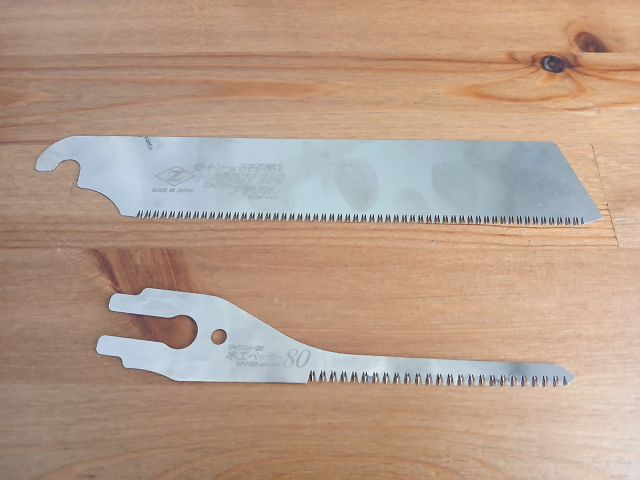
This error, on the part of the sellers, is clearly down to a lack of knowledge on the subject. As with all things these days (it seems), if someone makes a statement about a subject that is incorrect and there is nobody around to publicly lambast them for their glaring error immediately, then it gets repeated as fact for evermore. This is evident as multiple sellers have exactly the same descriptions (pretty much copied verbatim) for these products on their websites. But, I digress.
The only real exception to the above rule is the Ryoba-noko, which is often simply (and more importantly, incorrectly) referred to as a Ryoba. Again, this is purely down to a lack of education on the subject.
Tooth Pitch & TPI
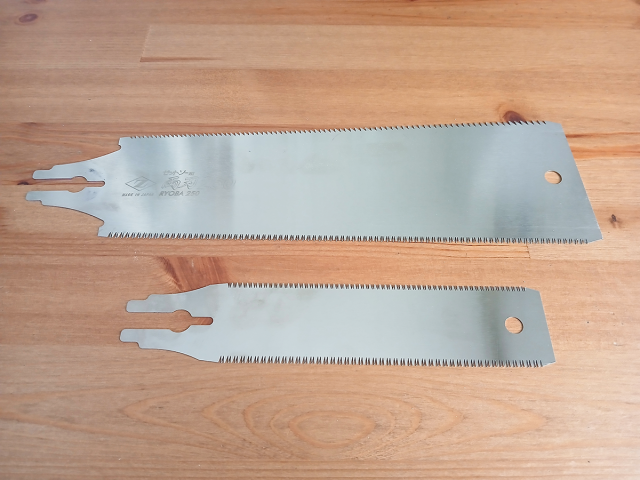
As a general rule of thumb when perusing the range of ZETSAW replacement blades; the shorter the blade length, the finer the tooth pitch. Or, to put it another way; the shorter the blade the greater the value of the TPI number.
For example; ZETSAW produces a number of cross-cut blades for Anahiki saws at 265mm, 250mm and 225mm in length. Where the pitch/TPI is; 1.75mm/15TPI, 1.4mm/18TPI and 1.2mm/21TPI respectively.
The only exception to this are blades specifically manufactured for Tatebiki. This term translates to “vertical cutting”, more commonly known as rip cuts in the Western world. These blades have a variegated tooth pitch (and thus, variegated TPI) along its length.
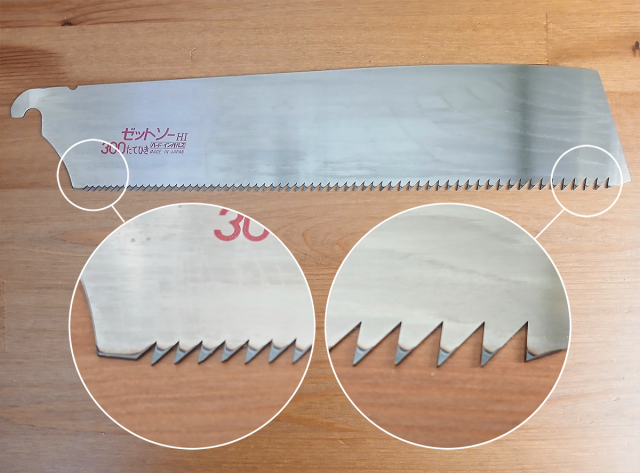
Tooth pitch of any saw (hand saw, bandsaw or circular saw) blade is the distance between the tip of each consecutive tooth, and is measured in millimeters or inches. TPI, or Teeth Per Inch, is (as the term clearly states) quite literally the number of teeth per inch. This is typically a whole number, but there is no reason why this could not be (and in some cases probably is) fractional. Eg: 16.5 TPI.
Tooth Set & Kerf
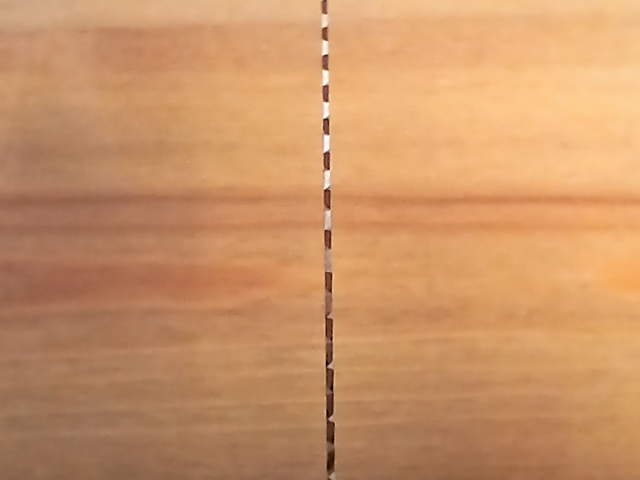
With the exception of one type, pretty much all ZETSAW replacement blades (and all other saw blades, to be fair) have “set”, to some degree or another. Where “set” is how much a tooth is bent away from the planar axis of the blade, and is measured in millimeters or inches (typically, fractions thereof for Japanese saws). Saws used for rough, dimensional cutting have a larger set, than saws used for finer cuts like joint work.
Kerf is defined as; the width of material removed by the cutting/sawing action. This width is roughly double the set, plus the blade thickness. As Japanese saw blades are considerably thinner than their Western counterparts, the kerf they produce is also much thinner. Plus, the amount of sawdust created is far less.
The exception, as mentioned above, are blades for Kugihiki saws. As these are specifically for flush trimming work, they typically have zero set to the teeth. Thus the kerf is exactly the width of the blade. Which means there is less chance of marring the surface of your work when flush trimming dowels, etc.
Tooth Pattern
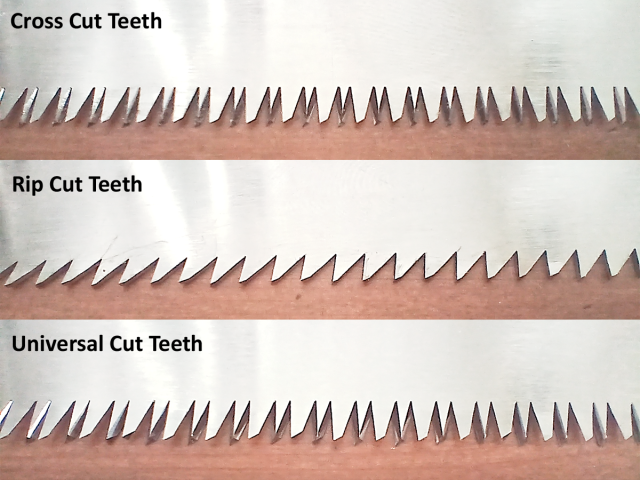
Not all saw teeth are created equally, and ZETSAW replacement blades (as intimated earlier) have three distinct tooth patterns; Cross Cut, Rip Cut and Universal Cut. Cross Cut and Rip Cut are self-explanatory. Teeth ground to perform better at, and specialise in, these types of cuts. Whereas, Universal Cut teeth are ground to be the “Jack-of-all-trades” (or Jack-of-all-cuts) of the saw blade world. This pattern works equally well for cross, rip and slant (mitre) cuts, but won’t have the same finesse as blades with the specialised patterns.
Hook & Rake
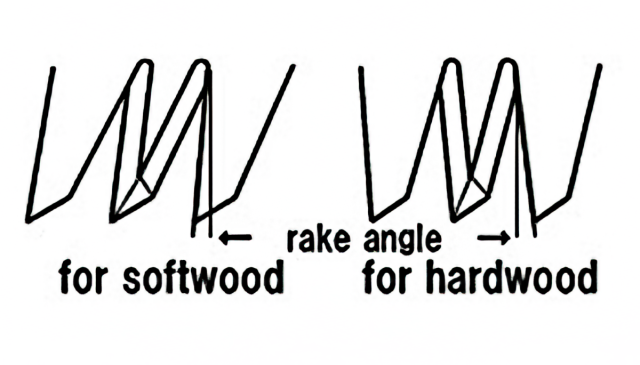
Hook and rake (when it comes to saw blade teeth) mean exactly the same thing, which is the “attack” angle of the teeth. This is usually measured in degrees and can be positive, negative or 0°. For blades used on softer wood species and green (wet) wood tooth rake is positive, so that the teeth can efficiently dig into the wood. This produces quicker, rougher cuts. For blades used on harder wood species (and metals) tooth rake is negative. This produces slower, smoother cuts and also helps to alleviate quick wear-out of the teeth.
Blade Fitting Types
The final thing to consider is how the blades affix to the handles. ZETSAW replacement blades have a number of ways that they attach to handles, depending on the saw type. The three main ways are; Screw Fit, Hook Fit and Pin Fit.
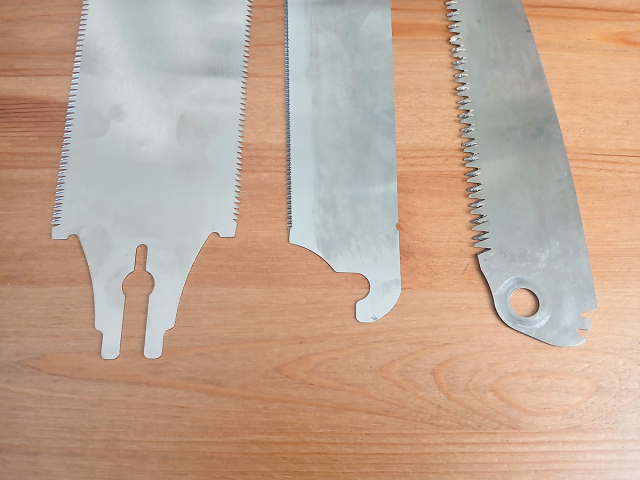
The ZETSAW Dozuki and Anahiki range primarily use the hook fit system. Their Ryoba-noko, Kugihiki, pruning and DIY range use the screw fit system. The pin fit system is used exclusively on their folding saw range.
There are a couple of handy PDF guides to both handle/blade compatibility and replacing blades, that are completely free to download, on the Silverhand Store. Links to both are in the Further Reading And Footnotes section, below.
Summary
I’ve always been a proponent of the phrase; “correct tool for the job”, and more so now since I’ve fully converted to only using Japanese saws. Western saws have an aura of “one saw, many uses”, which isn’t exactly true, but it’s how I now perceive them.
Using the correct saw for the job, or more specifically; the correct blade for the job, I feel saves you time in the long run, whatever type of saw you’re using. I also feel that it improves your working method and the work you produce. But, that might be subjective. What do you think..?
In short, ZETSAW replacement blades save you time, energy, materials and your hard earned cash. So, if you’re ready to take the dive into using Japanese saws, or are in need of a new saw or blade, then head over to Silverhand Store and see the ZETSAW range there.
Further Reading And Footnotes
For a more in depth look at the more popular types of Japanese Saws, click here to read my blog. And I go into more detail about hook and rake in my blog on Circular Saw Blades.
Click here to download the ZETSAW blade/handle compatibility guide, and here to download the blade replacement and fitting guide.
For more information about me and all that is Silverhand Creative, go check out the About Me page on this website. I have a presence on Instagram and Facebook, where I post photos (and the odd video) of ongoing and finished projects. There’s also a YouTube channel, where you can see how I go about doing what I do and what tools I prefer to use. So, feel free (there’s no pressure) to follow and/or subscribe to any (or all) of the above.
If you’re feeling fruity, and would like to support my endeavours, then please head over to the silverhandstore.com Shopify store and treat yourself a little something. I am most definitely amenable to commission work and have a web form for you to get in touch, should you be looking for something a little more bespoke.
All trademarks (registered or otherwise) used in this blog lie solely with their respective owners.